
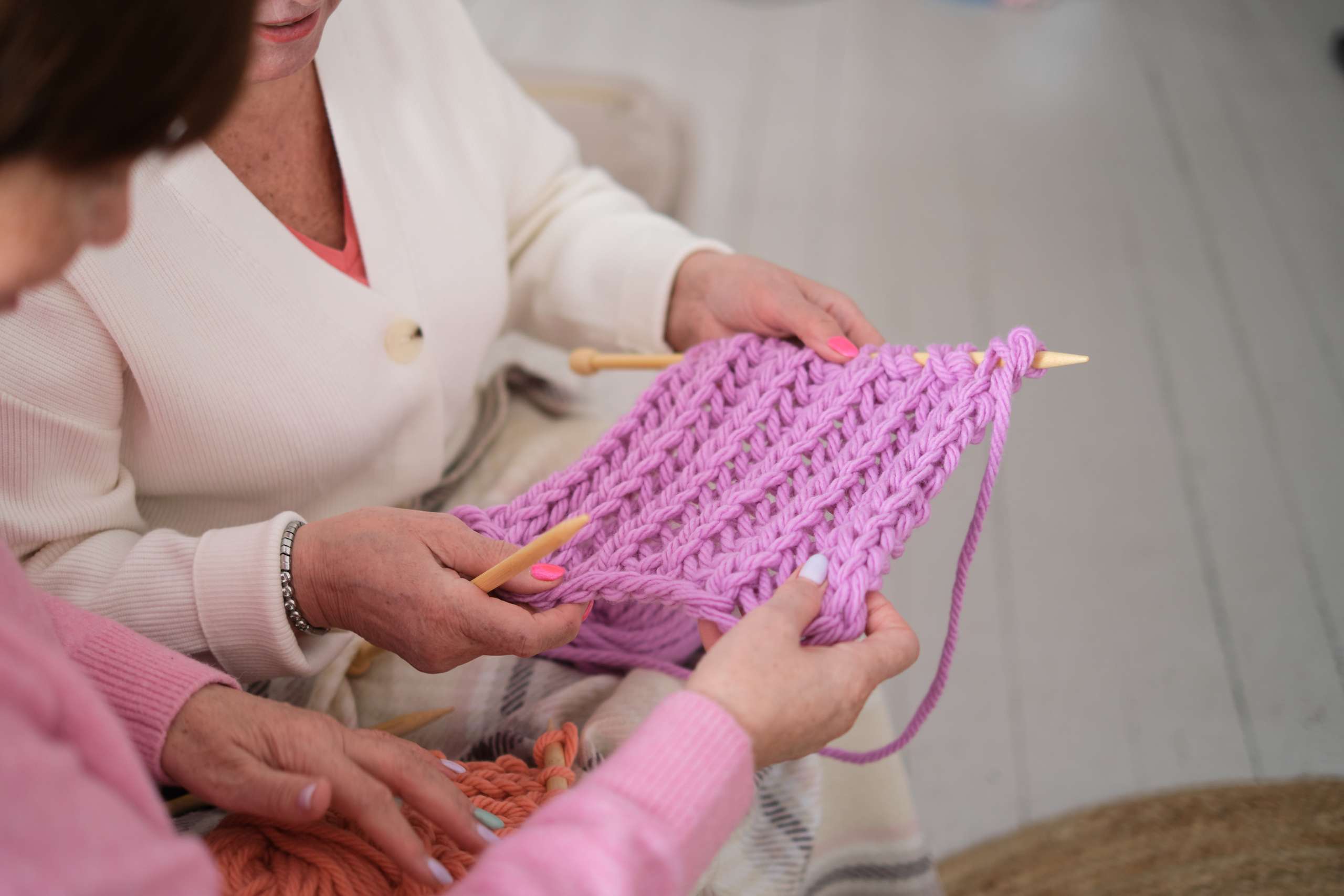
Here are some ideas for practicing with your clumsy knitting hands: Don’t try to knit fast. Practice knitting slowly, watching your fingers, yarn and needle to see how they work together. Try to notice how you put the needle into the stitch, wrap the yarn around the needle and how the new loop slides off the needle. This can help your hands understand what they’re supposed to do.
Try knitting a small swatch of stitches. Cast on a short row and knit them several times in a row. Instead of worrying about completing a row, pay attention to how the yarn moves around your fingers and into the stitches. If it’s coming off too fast, see if you can adjust the way you’re holding it so that it flows more slowly. If it’s snagging or catching, try to position your fingers in a different way so that it flows smoothly. This will help you get a sense of how the yarn should be moving through your fingers as you knit.
Often the reason knitting feels clumsy is because you’re holding the needles too tightly, for fear of dropping a stitch. But this will make your hands tense and your fingers fumbly. And if you’re holding the needles too tightly, they can’t move freely, so it’s harder to make the stitches and you get frustrated. So try holding the needles a little more loosely, so that they can rest easily in your hands. Instead of trying to clamp down on the yarn, just guide it.
After a few rows of knitting this way, you should start to feel better. It’s better to practice for a short amount of time than to try to knit for a long time and have your fingers get tired. So try practicing for 15 minutes at a time. Cast on a swatch and knit across it a few rows, slowly, trying to make each stitch perfect. Then stop and look at what you’ve done. If your stitches look funny or the yarn feels all wrong, adjust your fingers and try again. After a few of these adjustments, your hands should start to feel what they need to do. With practice, your clumsy hands will start to get the feel of knitting.
Your needles will begin to move more smoothly, your yarn will flow better through your fingers, and your stitches will start to look more even. When this starts to happen, you’ll know you’re getting the hang of it.